
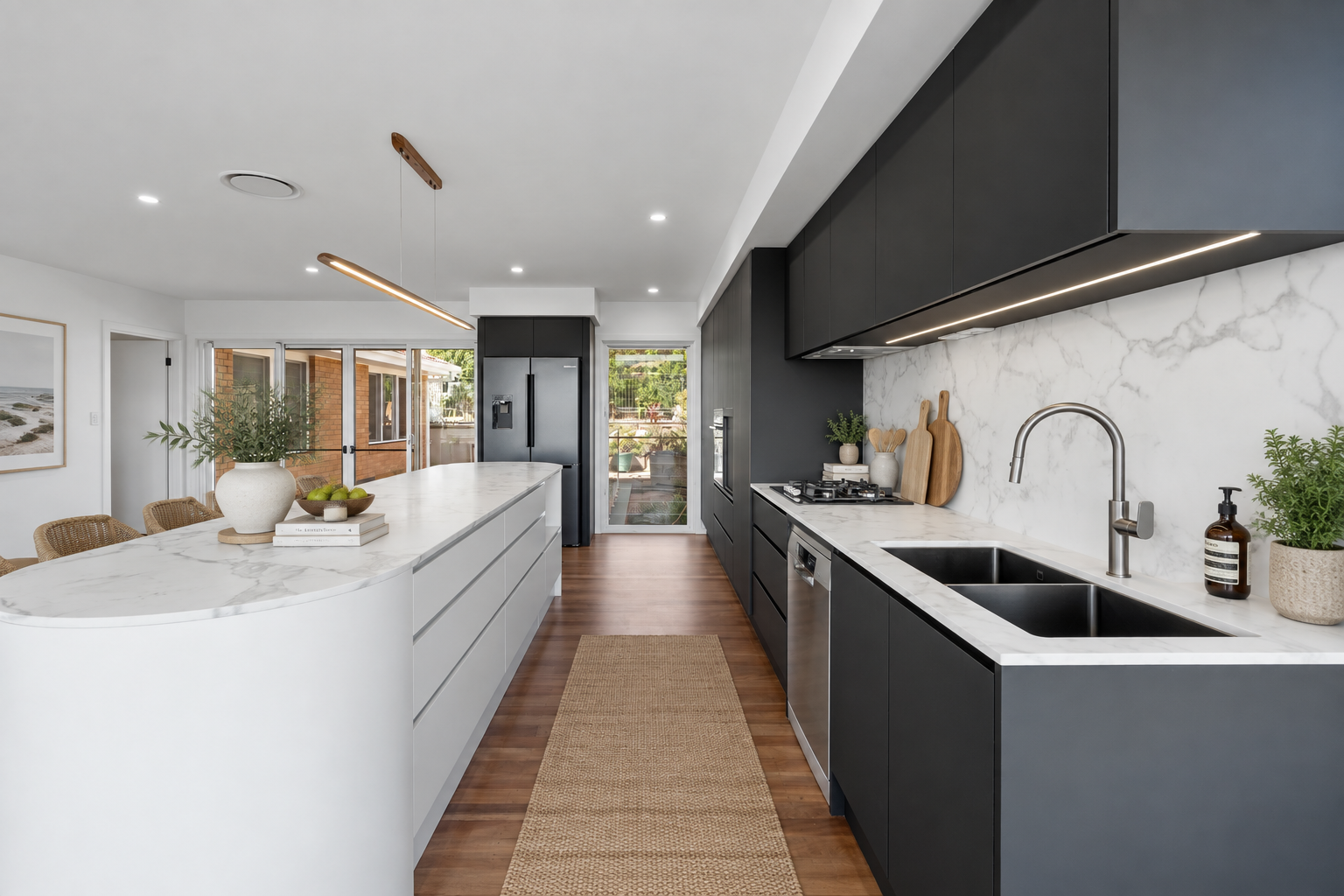
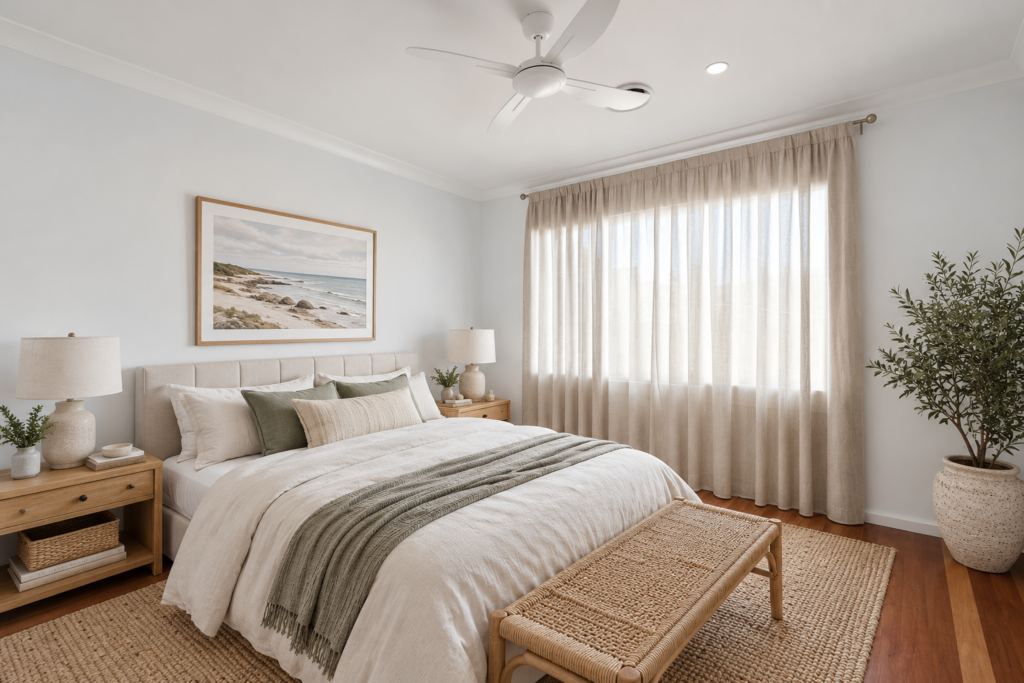
When you hear the words coastal home, it’s easy to picture white interiors, light timbers, soft blues and natural textures.
But there’s a difference between decorating a home in a coastal style and designing a home for coastal living.
For us, designing for coastal living goes beyond how a home looks. It’s also about how it responds to where it is: how it makes use of natural light and breezes, connects indoor and outdoor spaces, responds to its outlook and considers the conditions that come with living close to the coast.
Across Forster-Tuncurry and our surrounding coastal towns, those decisions can have a much greater impact on how a home feels to live in than any particular interior style.
Start With the Site, Not the Style
Before thinking about what a home will look like, it’s worth understanding the block it will sit on.
Orientation, slope, neighbouring properties, vegetation, prevailing breezes and the direction of the best outlook can all influence the design.
And good orientation isn’t simply a matter of pointing the house north.
Access to northern sun can be valuable, particularly during the cooler months, but it needs to be considered alongside summer heat, shading, breezes, views and the individual characteristics of the site.
Sometimes those things won’t all work neatly in the same direction either. The best outlook might be on one side of the block, while the best opportunity for sunlight or breezes comes from somewhere else.
A floor plan might work beautifully on one block, but place that same home on another and the result can be very different. That’s one of the biggest advantages of designing a custom home around its site, rather than starting with a predetermined plan and expecting it to work the same way everywhere.
This is also why we place so much importance on the early design stage. You can read more about that in Designing a Custom Home? Why the Concept Stage Matters.
Work With the Light and the Breeze
Natural light, views and the ability to open a home up to the breeze are often high on the wish list when building near the coast.
Large windows and expanses of glass can help achieve that, but more glass doesn’t automatically mean more comfort, just as more windows don’t automatically mean better ventilation.
Where windows are positioned, which direction they face and how they’re shaded all matter. Their size and style can make a difference too. A window isn’t only something to look through. It’s also part of how light, heat and air move in and out of the home.
And what’s happening outside the window matters as well. Neighbouring buildings, vegetation, fences and the shape of the land can all influence the way sunlight and breezes reach the house.
Sometimes it’s less about adding more windows and more about making the windows you do have work harder for the home.
Make the Most of Outdoor Living and the Outlook
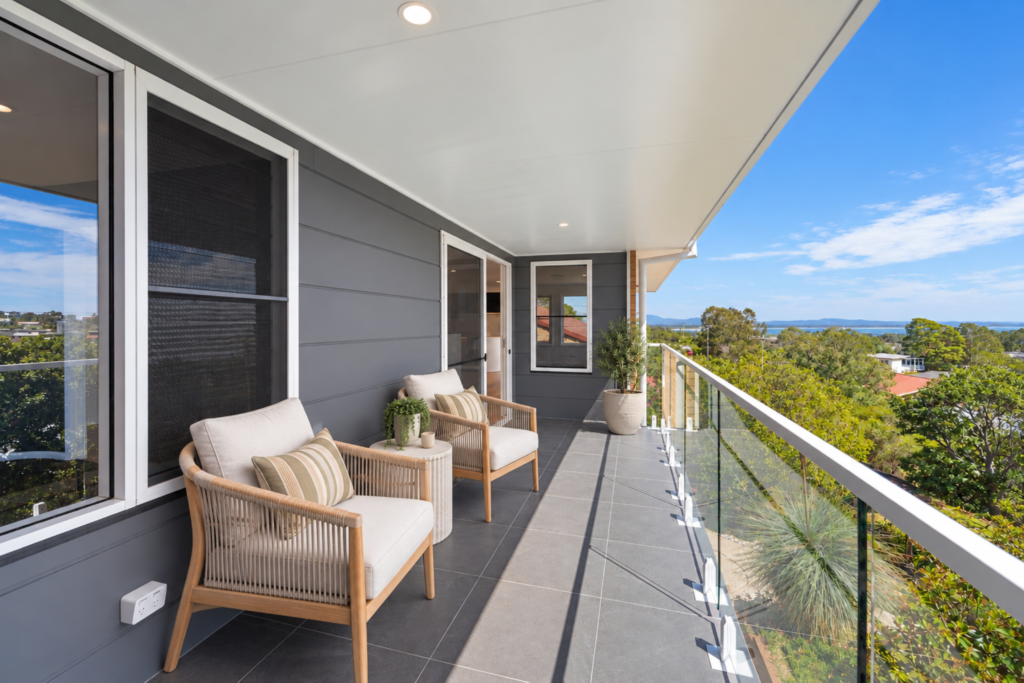
Living on the Mid North Coast naturally lends itself to spending time outdoors, and for many properties around Forster-Tuncurry, the outlook is a big part of what makes the location special.
But a beautiful view doesn’t automatically create a great outdoor space.
Where will the afternoon sun hit? Which direction does the weather usually come from? Is there enough shade? Is the area protected enough to use comfortably? How does it connect to the kitchen and living spaces?
It’s also worth thinking about when you’ll actually use the space. An area that feels beautiful and protected in the morning can be a very different place later in the day when the sun or weather is coming from another direction.
And the best view and the best orientation don’t always happen to be in the same direction.
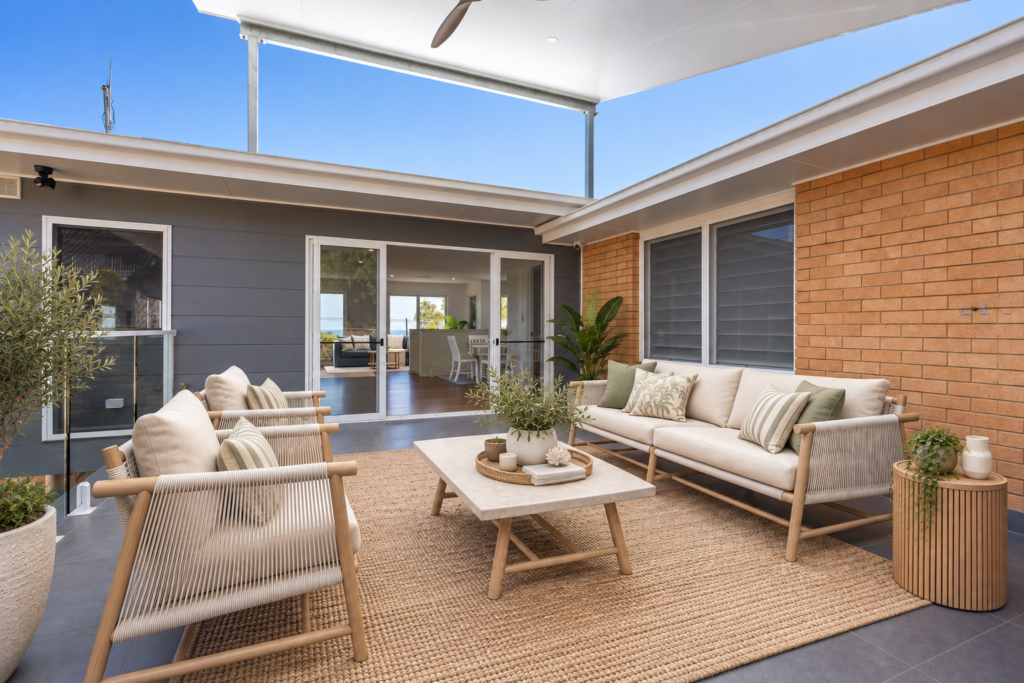
When outdoor spaces are considered as part of the overall design, they can become a genuine extension of the home rather than somewhere that only gets used when conditions are perfect.
That might mean large openings between the living area and alfresco, a protected outdoor dining area, somewhere to rinse off after the beach or simply a practical connection between the backyard and the areas the family uses most.
Coastal Exposure Can Vary From One Property to the Next
Being close to the coast can influence some of the materials, finishes and products used throughout a home.
Salt in the air, wind and moisture can all affect how different materials and components perform over time. But how much exposure a home receives can vary depending on where the property sits.
A home that’s directly exposed to coastal winds may may need to be approached differently to one that’s more protected, even if they’re not particularly far apart.
It’s something worth thinking about when materials and finishes are being selected. How something looks will always be part of the decision, but so is whether it’s suitable for the location, where it’s being used and the conditions it will be exposed to.
Sometimes it’s the smaller details, like external hardware, fixings or finishes, that are easy to overlook.
Think About How You’ll Actually Use the Home
It’s easy to focus on the bigger things when you’re thinking about a home: how many bedrooms you need, the size of the kitchen, whether you want an alfresco and what you’d like everything to look like.
But it’s often the smaller, everyday things that make a difference once you’re actually living there.
If you’re regularly coming home from the beach, where do the sandy shoes, towels and beach gear go? If you spend a lot of time outside, how easily can you move between the backyard, living areas and kitchen? If you have young kids, can you see where they’re playing from the parts of the home you use most?
The answers will be different for every household, which is why it’s worth thinking beyond a list of rooms and asking how you actually want to use them.
Instead of only asking “What do we want in our home?”, it can be just as useful to ask “How do we want to live in it?”
We explored this idea further in A Well-Designed Custom Home Starts With the Right Questions, including some of the questions worth asking before a design begins to take shape.
And If You’re Renovating?
If you’re renovating an existing home, many of the same ideas still apply, but you also have the benefit of already knowing how the house feels to live in.
You probably know which rooms don’t get enough natural light, whether the outdoor area gets too hot or exposed at certain times of day, and which parts of the home feel disconnected from the way your family actually lives.
A major renovation can create opportunities to rethink those things: relocating living areas, changing window and door openings, improving the connection with outdoor spaces or bringing more natural light into parts of the home that need it.
Of course, an existing house comes with constraints, and not every change will be possible. But understanding what’s already working, and what isn’t, gives you a useful place to start.
Coastal Living Is More Than a Look
There’s nothing wrong with loving white interiors, light timber and natural textures. But those choices are about coastal styling.
Designing for coastal living goes deeper.
It’s about creating a home that responds to its location and works for the people who are actually going to live there.
There isn’t one formula that works for every property, and that’s exactly why good custom design starts with the site, the people and the way they want to live.
Planning a custom home or major renovation in Forster-Tuncurry or the surrounding area? Get in touch with Manning Homes to talk through your project.